On this page
Why metro-connected Mumbai homes are drawing buyers now
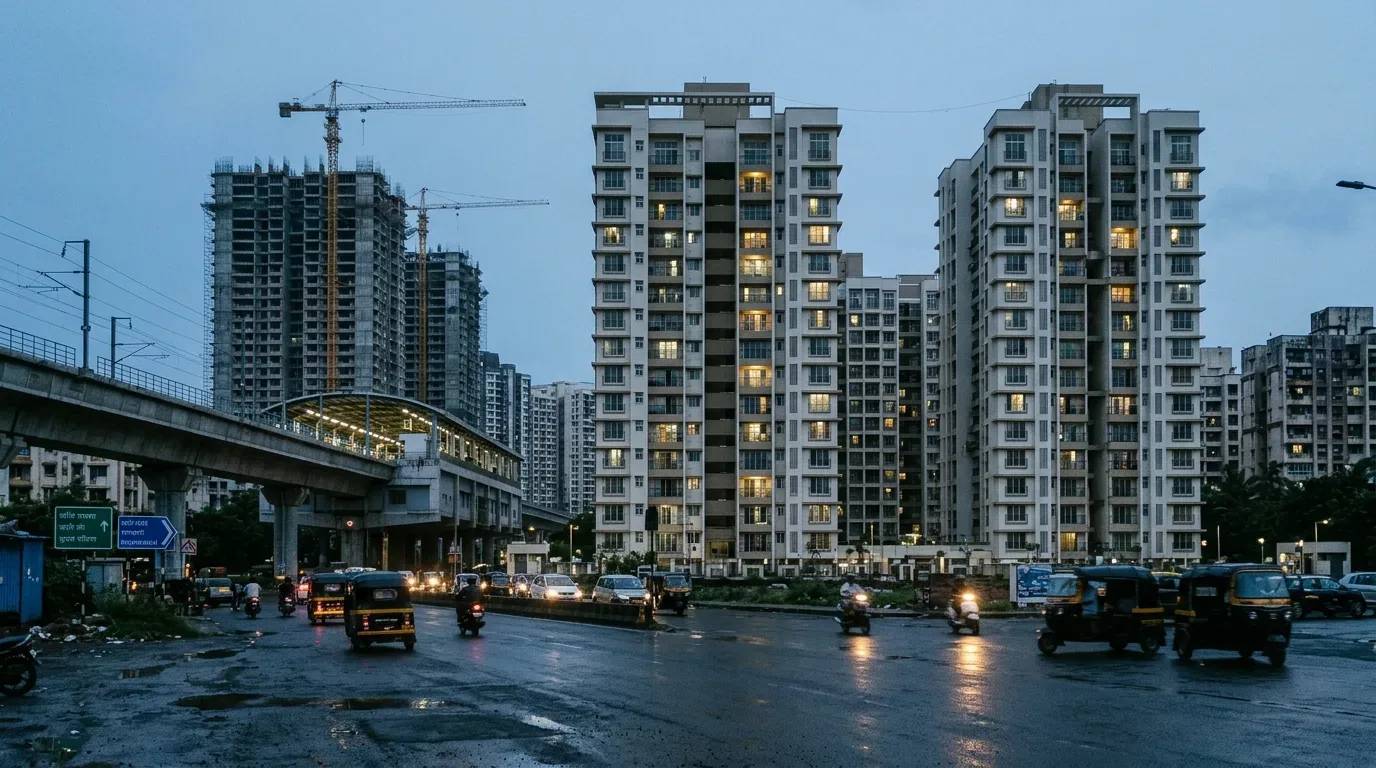
If you’re buying in 2027, a metro station can make a locality more useful, but the case isn't only about saving time on the commute. Buyers are also looking at Mumbai’s rising prices and the number of under-construction homes available across the region.
Mumbai’s median quoted residential sale rate reached ₹30,769 per sq ft in 2026 (Source: Mumbai Property Exchange). Residential prices rose 13.10% in the last year (Source: Housing.com). So, waiting for a large city-wide correction may not work, especially if you’re buying for your own use.
The value difference is easier to see outside Mumbai’s costliest pockets. Average asking prices were ₹13,533 per sq ft in Thane and ₹17,070 per sq ft in Navi Mumbai during the period from 2025 Q4 to 2026 Q3 (Source: PropertyWala). These are broad market figures, not quotes for every home near a metro station. Still, they explain why buyers are checking metro-linked suburbs instead of looking only at established central locations.
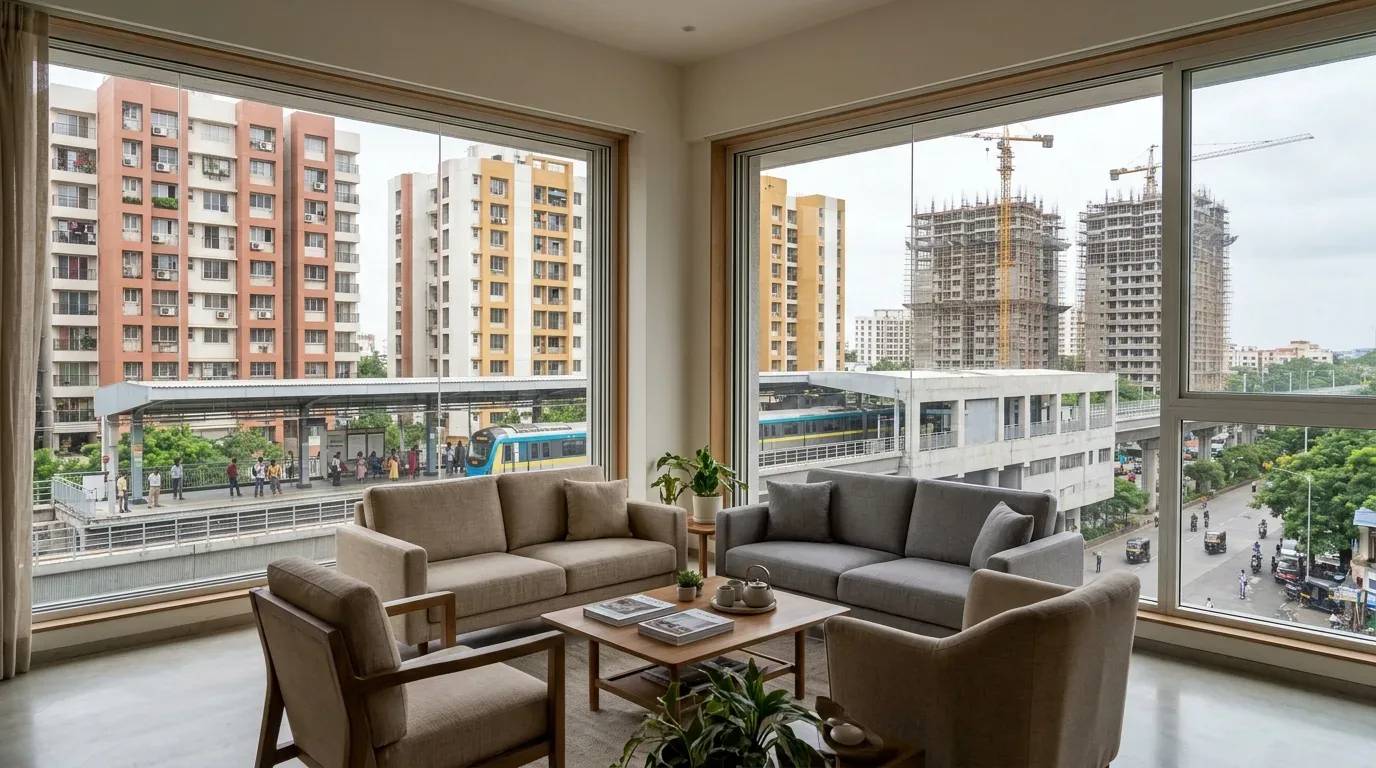
The project’s construction stage matters just as much as the station. Early buyers may get launch pricing or a flexible payment plan. They also carry construction and possession risk. A nearby station helps only when the building is ready, the road to it works and the promised connectivity is actually available.
For a wider search, browse properties in Mumbai and filter by project stage, location and budget. Don't rely on the words “near metro” in a listing.
- Mumbai median quoted sale rate: ₹30,769 per sq ft in 2026 (Source: Mumbai Property Exchange)
- Mumbai residential price growth: 13.10% year on year (Source: Housing.com)
- Thane average asking price: ₹13,533 per sq ft (Source: PropertyWala)
- Navi Mumbai average asking price: ₹17,070 per sq ft (Source: PropertyWala)
Metro Line 9 changes the Dahisar–Mira Road calculation
The clearest transport improvement in the research is Metro Line 9 Phase 1, commissioned on April 7, 2026 (Source: Mumbai Metropolitan Region Development Authority). It covers 4.7 km between Dahisar East and Kashigaon (Source: Mumbai Metro Tracker).
For people considering Dahisar East, Mira Road and nearby western suburbs, this adds another rail option for local travel and onward connections. That can make more locations acceptable to buyers and support demand. But it won't lift every project equally. Walking distance, feeder roads and the station entrance all matter.
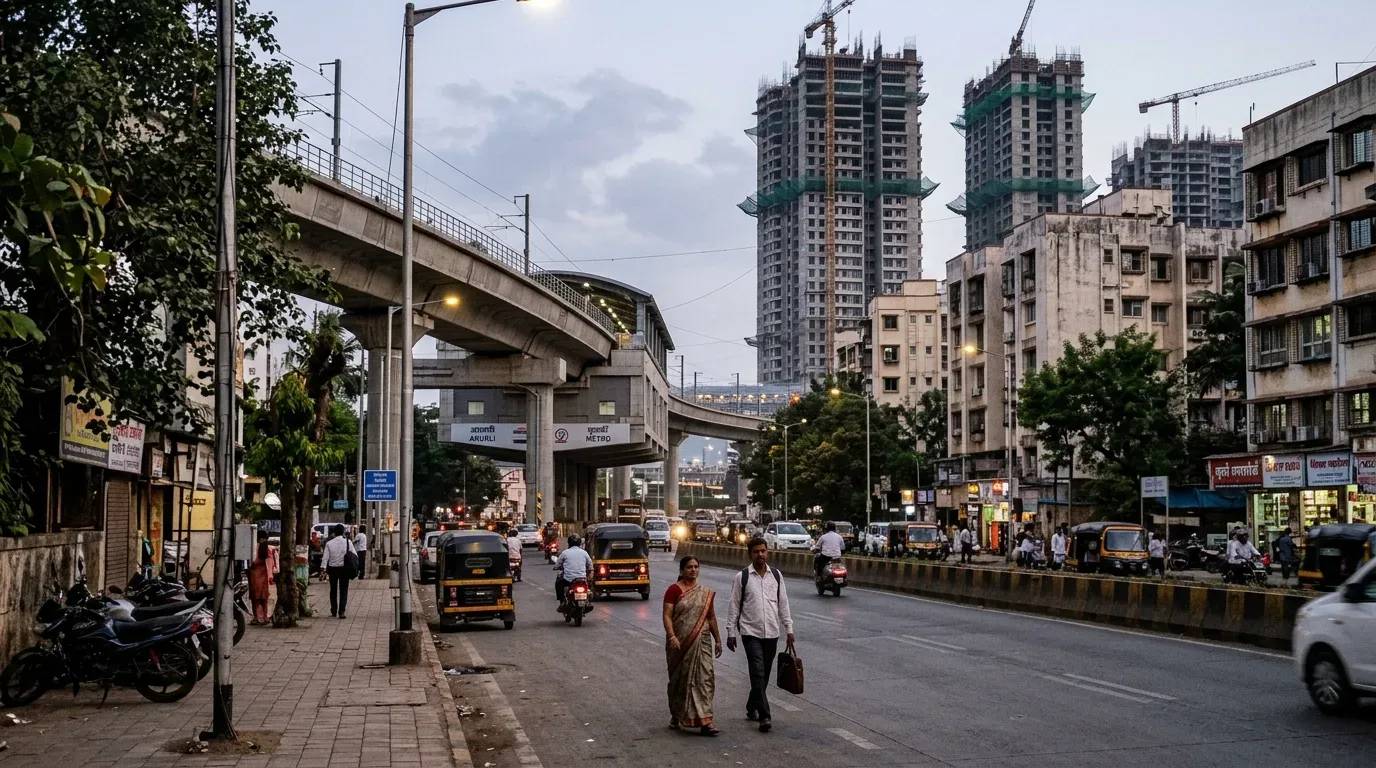
MMRDA planned seven foot overbridges in the Mira-Bhayandar area along the line (Source: Mumbai Metropolitan Region Development Authority). This matters on the ground. A station is less useful if reaching it means crossing a wide road in unsafe conditions. Visit the route on a weekday, in the rain and after dark. A brochure can show the station. It can't show the walk home.
The region has also seen price movement alongside infrastructure spending. Suburban Mumbai, Thane and Navi Mumbai recorded residential price increases of 10% to 12% year on year in Q1 2026 (Source: Moneycontrol). That is a regional comparison, not proof that every project beside a metro station rose by the same amount.
If your search moves east, read the Powai and Kanjurmarg investment comparison for a separate look at transport and employment areas.
What the brochure leaves out around the station
Listings usually mention the distance to the station and the possession date. They rarely say whether that distance is measured from the project gate, the tower entrance or a future road that hasn't been completed. For a daily commute, that detail can matter more than the headline distance.
In the Dahisar East–Kashigaon belt, walk the full route instead of stopping at the project gate. Check footpaths, crossings, lighting, monsoon waterlogging and the availability of autos or buses at the station. The planned foot overbridges are helpful, but you still need to see which route works for your building.
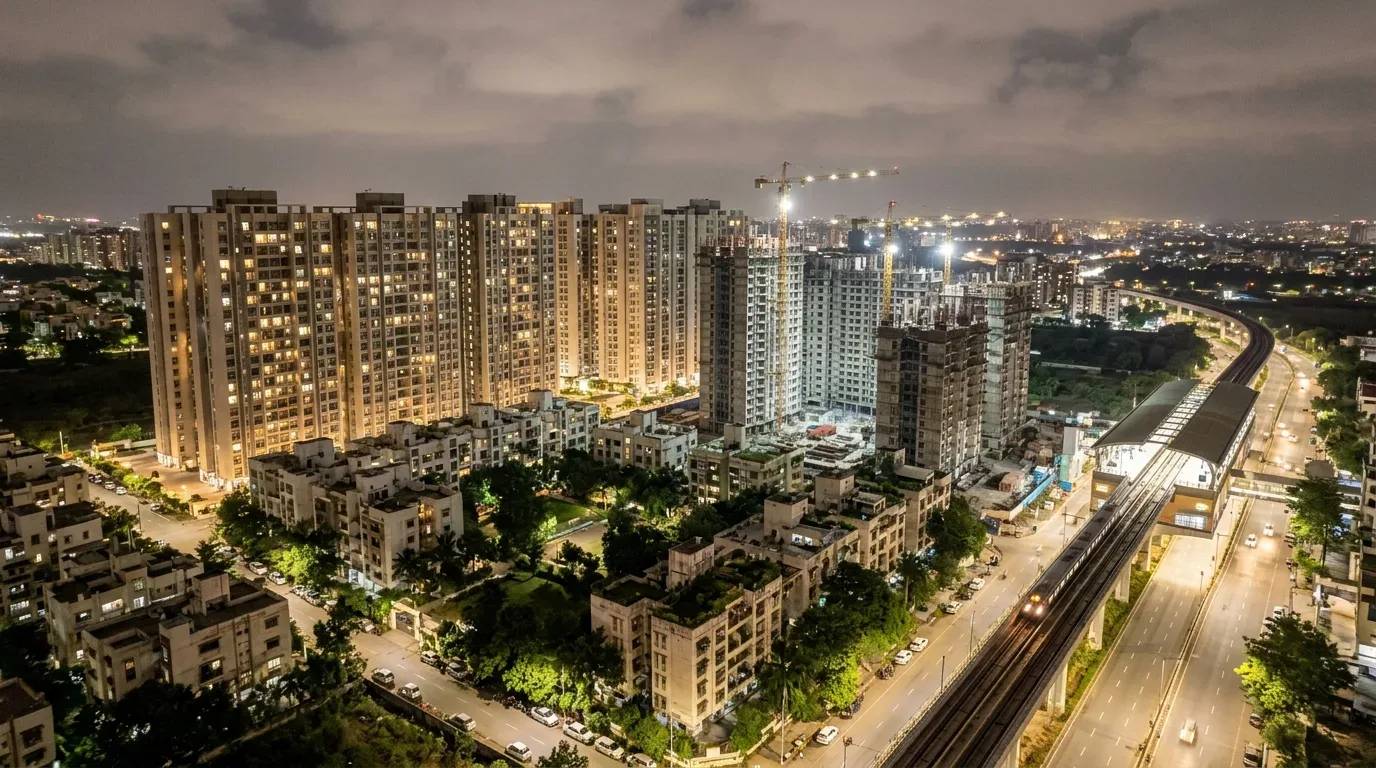
Supply is another part of the check. Mumbai had 431 under-construction residential projects with a stated possession date in 2027 (Source: Mumbai Property Exchange). More choice is useful, but it also means comparing construction progress, approvals, past delivery and the exact agreement date. A metro address doesn't make a purchase safe by itself.
A possession date is not the same as visible construction progress. Runwal Realty’s 25 Hour Life in Thane West had a stated possession date of December 2027 (Source: Mumbai Property Exchange), while Raj Realty’s 127 Raj Homes Tower D in Mira Road had a stated possession year of 2026 (Source: Mumbai Property Exchange). These are stated project timelines, not proof that every buyer got possession on those dates.
Before paying a booking amount, ask for the latest construction photographs, the registered agreement, the payment schedule and the project’s RERA details. Compare the promised date with the actual pace of work.
Mumbai’s price story has already turned upward
Mumbai’s asking-price trend hasn't been a straight climb. The average asking price was ₹24,375 per sq ft in 2022, fell to ₹21,500 per sq ft in 2023, then recovered to ₹24,469 per sq ft in 2024 and ₹25,294 per sq ft in 2025 (Source: PropertyWala).
The bigger move came in 2026, when Mumbai’s average asking price reached ₹34,047 per sq ft (Source: PropertyWala). This is a city-wide indicator, not a quote for Dahisar, Mira Road, Thane or any other station locality. It does explain why buyers feel pressure when new launches are repriced quickly.
Market figures can differ depending on how they're collected. The Times of India reported a weighted average residential price of ₹8,277 per sq ft in 2024 and a 5% price rise that year (Source: The Times of India). Its source, sample and method differ from PropertyWala’s asking-price series, so the two figures shouldn't be treated as identical.
For a buyer, the practical rule is simple: compare like with like. Use the same locality, project type, carpet-area basis and construction stage. An early-stage launch may look cheaper than a nearly complete building, but that difference may reflect risk, specifications or payment timing rather than a real bargain.
Mumbai average asking price trend. 2022: ₹ per sq ft 24,375; 2023: ₹ per sq ft 21,500; 2024: ₹ per sq ft 24,469; 2025: ₹ per sq ft 25,294; 2026: ₹ per sq ft 34,047.
Source: PropertyWala
View data table
| Item | ₹ per sq ft |
|---|---|
| 2022 | 24,375 |
| 2023 | 21,500 |
| 2024 | 24,469 |
| 2025 | 25,294 |
| 2026 | 34,047 |
Who should buy here—and who should wait
Metro-adjacent under-construction homes make sense for buyers who can wait through construction and expect to use the network regularly. They may also work for investors who understand that rent and resale depend on actual connectivity, not just a station name in an advertisement.
They’re a poor fit for buyers who need to move in soon, can't manage construction-linked payments or don't have room in the budget for rent and home-loan payments during construction. If your workplace is fixed and the commute is already painful, a cheaper home far from the station may cost more in time and transport.
Keep the budget grounded. Advertised project rates in premium western suburbs show how wide the spread can be: Prestige Forest Hills Phase 2 in Mulund West was advertised at about ₹28,498 per sq ft, with stated possession in July 2032 (Source: Mumbai Property Exchange). Rustomjee Ozone Skye in Goregaon West was advertised at about ₹34,231 per sq ft, with stated possession in December 2031 (Source: Mumbai Property Exchange). Kalpataru Elaara in Goregaon West was advertised at about ₹42,491 per sq ft, with stated possession in May 2030 (Source: Mumbai Property Exchange).
These are project examples, not metro-locality averages. They show why you should compare the full cost with the waiting period, rather than looking only at the launch rate. Use the home-loan EMI calculator before booking, and check available lenders through home-loan banks.
Dahisar, Borivali, Mira Road, Thane and Navi Mumbai: the trade-offs
This station-linked belt doesn't offer one uniform value proposition. Borivali has established demand but may cost more. Mira Road can have a lower entry point in selected projects. Thane and Navi Mumbai offer wider regional choices, though they aren't substitutes for Mumbai proper in every buyer’s case.
| Micro-market | Available price figure | What it suggests | Main caution |
|---|---|---|---|
| Borivali West | ₹24,601 per sq ft (Source: Housing.com) | Established western-suburban pricing | Higher entry cost than some eastern or extended suburban options |
| Borivali East | ₹10,993–₹17,713 per sq ft (Source: Magicbricks) | Wider spread across properties and specifications | Compare building age, exact pocket and carpet area |
| Thane | ₹13,533 per sq ft (Source: PropertyWala) | Lower regional average than Mumbai’s median | Commute depends on your final workplace and station access |
| Navi Mumbai | ₹17,070 per sq ft (Source: PropertyWala) | A broader value alternative | Do not treat city-wide infrastructure as a guarantee for one project |
Borivali West’s average property rate was ₹24,601 per sq ft in 2026 (Source: Housing.com), while Borivali East properties ranged from ₹10,993 to ₹17,713 per sq ft (Source: Magicbricks). So, “Borivali” by itself isn't enough information for a purchase decision.
The metro advantage is most useful when the station is genuinely usable, possession is realistic and the price is below the established premium in the wider market. It fades when the building is far from the station, the approach road is poor or the project is due years after you need the home.
If you’re also considering the harbour side, the Navi Mumbai airport property guide can help separate infrastructure expectations from project-level checks.
Frequently Asked Questions about Mumbai metro station localities
Is buying near a Mumbai Metro station a good idea for 2027?
It can work, especially for end users who will use the network and can wait for construction to finish. Mumbai’s residential prices rose 13.10% in the last year (Source: Housing.com), but that city-wide figure doesn't promise returns from any one project.
Which metro-connected belt offers better value: Borivali, Mira Road or Thane?
That depends on your commute, possession requirement and budget. Available comparison figures show ₹24,601 per sq ft in Borivali West (Source: Housing.com), ₹10,993–₹17,713 per sq ft in Borivali East (Source: Magicbricks) and ₹13,533 per sq ft in Thane (Source: PropertyWala). These figures come from different market samples, so don't treat them as identical quotes.
Is an under-construction flat cheaper than a ready home?
It may have a lower launch or early-stage price, but that doesn't answer the question by itself. Add temporary rent, loan payments, waiting time and construction risk. Then compare the result with a completed home in the same micro-market.
What taxes and charges should I budget for?
An under-construction flat generally attracts 5% GST, or 1% for an eligible affordable home (Source: Shree Giriraj). The cited Mumbai example also uses 6% stamp duty (Source: Shree Giriraj) and registration charges capped at ₹30,000 (Source: Shree Giriraj). Confirm the treatment that applies to your agreement before making payment.
Can I rely on the possession date shown in a listing?
No. Treat the listing date as the beginning of your checks, not as a guarantee. Review the registered project details, construction progress, agreement date, approvals and the developer’s delivery record before committing.
Metro-connected localities can offer a sensible value balance in 2027, but the station is only one part of the purchase. Check the full cost, walking route, construction stage and possession risk before booking. Explore new projects on PropMatters and shortlist homes you can afford throughout the waiting period.
- Mumbai metro station localities
- Mumbai metro homes
- flats near Mumbai Metro
- Mumbai under-construction flats
- Mira Road property
- Dahisar property
- Thane homes
- Borivali property prices
- Mumbai property investment
- metro-connected homes