On this page
Will Mumbai rent justify what you pay for the flat?
Question: If I buy an apartment in Mumbai, will the rent cover my costs?
Before getting carried away by the brochure’s swimming pool, check the rent. Mumbai’s residential rental yields range from 2.5% to 4.6% a year across micro-markets. (Source: Silver Streams Realty Insights) Another estimate puts the city’s average gross rental yield at 2%–2.5% a year. (Source: Moneycontrol) That difference matters. A more expensive neighbourhood may not bring a matching increase in rent.
Take the typical new-project 2 BHK price of approximately ₹2.63 crore for about 733 sq ft. (Source: IndiProp) At a 2%–2.5% gross yield, the rough annual rent suggested by that price is about ₹5.26 lakh to ₹6.58 lakh before maintenance, vacancy, repairs, property tax and brokerage. (Source: Moneycontrol) In monthly terms, that is roughly ₹43,800–₹54,800. Just arithmetic, not a broker’s assurance.
Use this only as a first filter. Actual rent will depend on how close the flat is to work hubs and public transport. Furnishing, parking, floor, view and building upkeep also matter. Ask three local brokers for recent rent agreements, not only their quoted rents. Speak to residents as well. Find out how long comparable flats usually sit empty between tenants.
You also need a neighbourhood-level price check. Mumbai’s average asking price was ₹32,000 per sq ft in October 2026. (Source: Property Nivesh) Powai’s median quoted rate was ₹30,769 per sq ft, while Andheri West stood at ₹36,971 per sq ft. (Source: Mumbai Property Exchange) These figures won’t replace a building-level valuation, but they can show when a launch price needs a proper explanation.
For more options, compare properties in Mumbai by locality, project stage and budget. If rental income is the plan, put the rent calculation next to the loan calculation. A well-connected flat bought at a sensible price may serve you better than a fashionable address bought at any price.
What paperwork should an under-construction Mumbai buyer verify?
Question: Which legal checks should I complete before paying a booking amount?
Begin with the Maharashtra real estate regulator’s records. Check the developer, land details, approved plans, promised possession date and construction updates. The project name used in the sales office presentation should match the legal project name. If the salesperson says the registration details will come later, pause the purchase.
Ask for the title report, development agreement where relevant, sanctioned plan, commencement certificate and the other building approvals. A commencement certificate permits the approved construction to begin. An occupation certificate, or OC, shows that the completed building has met the authority’s conditions for occupation. A completion certificate, or CC, confirms completion against the approved plan. For an under-construction flat, ask which approvals are already in place and which are still pending.
Question: What extra taxes and charges should I budget for?
For a purchase in Mumbai city and suburbs, stamp duty including the metro cess is 6% of the property value. (Source: Landeed) Women purchasing a residential property solely in their names pay 5% including the metro cess. (Source: Landeed) Registration fees in Maharashtra are 1% of the value, capped at ₹30,000. (Source: Landeed)
On the listed new-project 2 BHK price of ₹2.63 crore, 6% stamp duty is roughly ₹15.78 lakh. The registration fee would reach the ₹30,000 cap. Together, these two statutory charges are about ₹16.08 lakh, before other stated charges. (Source: Landeed; IndiProp) Confirm the exact amount before signing, particularly if the agreement value is different from the headline price.
GST on an under-construction residential property outside the affordable-housing segment is effectively 5%. (Source: Central Board of Indirect Taxes and Customs) On ₹2.63 crore, that comes to approximately ₹13.15 lakh. (Source: Central Board of Indirect Taxes and Customs; IndiProp) Ask for a written cost sheet covering the base price, GST, stamp duty, registration, floor-rise charges, parking, clubhouse, maintenance deposits and infrastructure charges. Don’t compare one project’s base price with another project’s all-in figure.
You can also browse new projects in Mumbai, but use an online listing only as a starting point. The agreement and approved documents matter more than the launch presentation.
What do Mumbai residents notice after the sales team leaves?
Question: What should I learn from people already living near the project?
Visit the exact street at different times of day. A locality may seem easy on a Sunday afternoon and become a different proposition during a weekday commute. Ask residents about water pressure, power backup, lift downtime, mobile signal, waste collection, parking discipline and construction noise. Also ask what happens to the road during heavy rain.
If the project is under construction, speak to residents in the developer’s older buildings. Ask whether possession came on schedule, whether the final carpet area matched the agreement and how defects were dealt with. Find out what the maintenance bill became after handover. These answers often tell you more than a polished sample flat.
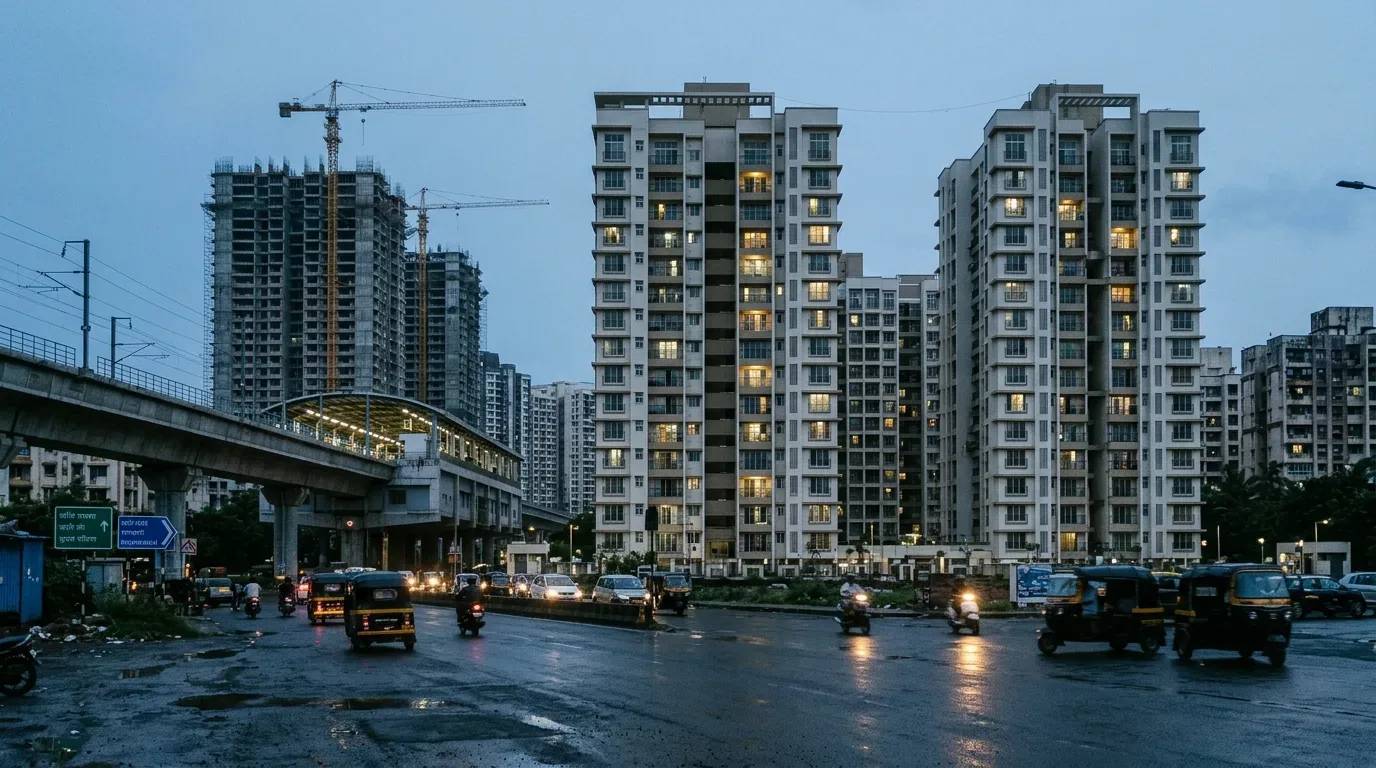
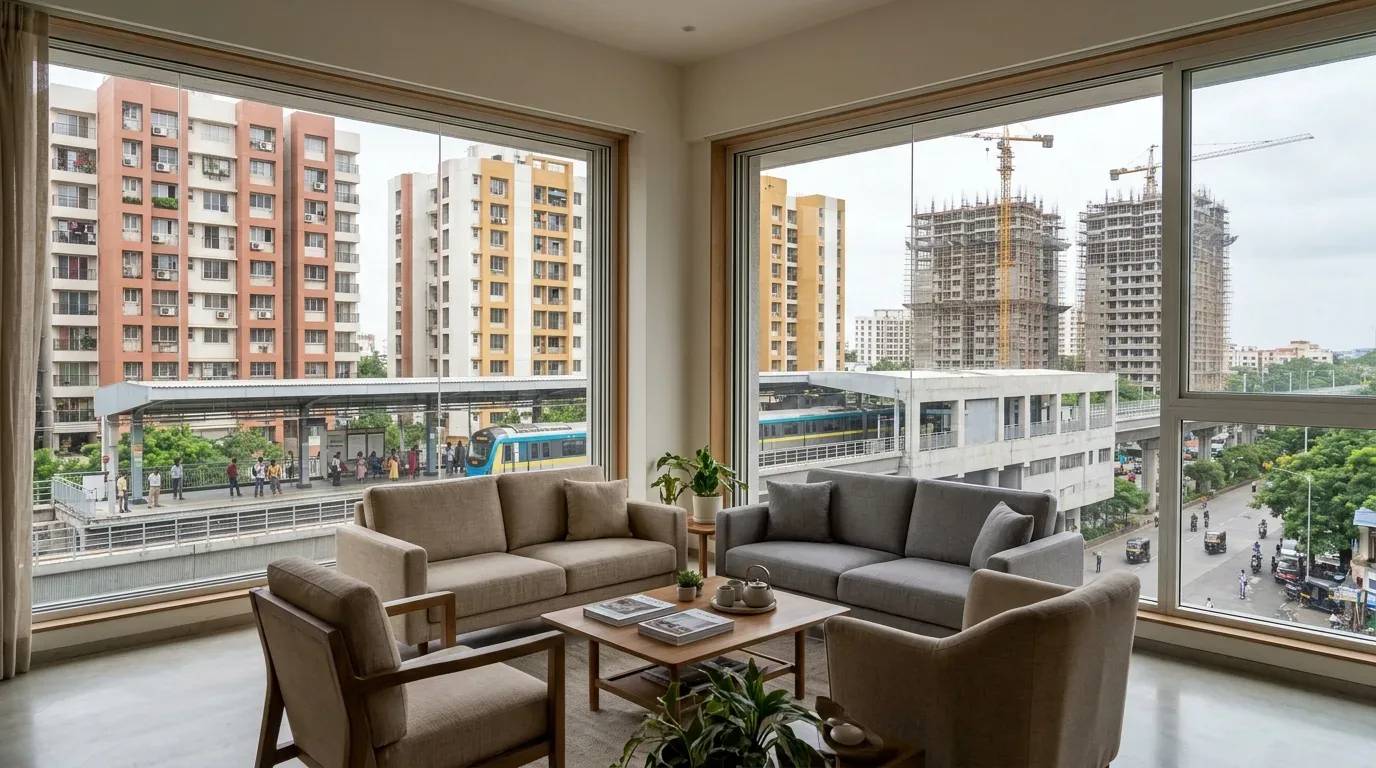
Transport claims need a map and a stopwatch. Mumbai Metro Line 3 became fully operational after its final segment opened between Acharya Atre Chowk and Cuffe Parade on 8 October 2025. (Source: Japan International Cooperation Agency) That is a citywide infrastructure fact, not proof that your building is conveniently located. Time the walk, road crossing and last-mile ride from the proposed home to the station.
Ask residents about construction planned nearby too. A clear view today could become another tower, road project or commercial building tomorrow. Check the plot beside the project, access roads, reserved open spaces and any large construction visible from the site. For a broader South Mumbai comparison, read this South Mumbai luxury market guide, but don’t use luxury-market figures to value an ordinary apartment.
Where can an under-construction Mumbai purchase go wrong?
Question: What are the biggest risks before I commit?
The first risk is delivery. A launch price may look attractive because the building isn’t finished, but your rent and loan payments can overlap for a long time. Read the agreement’s possession date, grace provisions, delay compensation and cancellation terms. Then compare them with the visible construction progress and official project updates.
The second risk is a payment plan that looks comfortable only because it pushes the pressure ahead. A construction-linked plan ties instalments to stages of work. A time-linked plan may demand payment on fixed dates even when the site appears slow. Ask your lender and lawyer to examine every demand notice. Don’t pay a construction instalment simply because a salesperson says the next price revision is near.
The third risk is paying extra for a promise about the future. Mumbai’s northern Coastal Road section is intended to connect Nariman Point to Bhayandar, with completion targeted for December 2028. (Source: The Indian Express) It may improve access, but a target is not the same as a working commute. Value the home on today’s connectivity. Treat future access as a bonus.
Oversupply is another practical concern. Check the number of unsold homes, competing launches and likely tenant demand in the immediate catchment. A large project may have better amenities, but it can also put many similar resale and rental flats on the market at the same time.
And don’t mistake a developer’s brand for a clean transaction. Have an independent property lawyer check the title, approvals, agreement clauses and development rights. Keep every promise about possession, specifications, parking and refunds in writing.
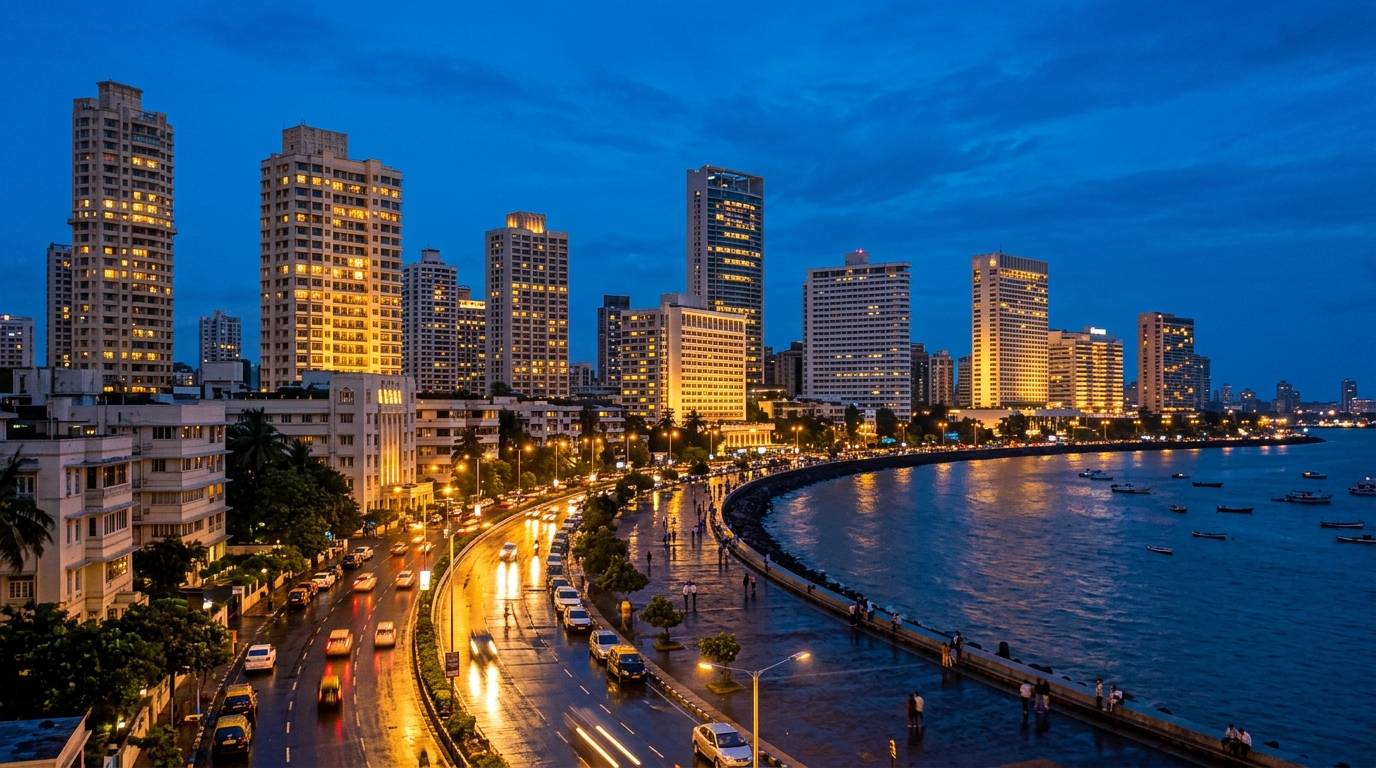
Mumbai’s price spread should change how you compare a neighbourhood
Question: What is the most important price signal?
The standout number is ₹64,378 per sq ft, the median quoted residential rate in Worli in 2026. (Source: Mumbai Property Exchange) That is more than twice Mumbai’s average asking price of ₹32,000 per sq ft. (Source: Property Nivesh) But another source put Worli residential prices at ₹88,734–₹95,354 per sq ft in the second half of 2025. (Source: Knight Frank) Different publishers, dates and property samples can produce very different figures. Use these numbers to understand the range and direction, not to price one specific tower.
The gap shows up in other areas too. Thane West’s median quoted rate was ₹18,901 per sq ft, Powai’s was ₹30,769 per sq ft, and Andheri West’s was ₹36,971 per sq ft. (Source: Mumbai Property Exchange) Knight Frank placed Ghatkopar at ₹26,263–₹27,387 per sq ft and Lower Parel at ₹32,671–₹35,730 per sq ft in the same half-year period. (Source: Knight Frank)
So compare similar homes. Look at carpet area, age, floor, parking, possession status and the exact street. A launch quote of ₹34,000 per sq ft for a new project and an under-construction average of ₹36,400 per sq ft in Mumbai are city-level benchmarks, not a guarantee for your chosen project. (Source: Square Yards)
The investment case depends on yield, not only on price appreciation. The available city estimates range from 2%–2.5% average gross yield to 2.5%–4.6% across micro-markets. (Source: Moneycontrol; Silver Streams Realty Insights) If your spreadsheet works only after assuming a large future price rise, the purchase carries more risk than the brochure suggests.
For a focused comparison of two eastern suburbs, see Powai and Kanjurmarg property insights. For loan planning, use the home loan EMI calculator after adding the full cost sheet, not only the advertised apartment price.
Frequently Asked Questions about buying in a Mumbai neighbourhood
Is an under-construction apartment cheaper than a ready home in Mumbai?
A new-launch project averaged ₹34,000 per sq ft in 2026, while under-construction projects averaged ₹36,400 per sq ft. (Source: Square Yards) These are city averages. Compare the same locality, carpet area, specifications and possession risk before making a decision.
How much should I keep aside for taxes on a Mumbai apartment?
For most buyers in Mumbai city and suburbs, stamp duty including metro cess is 6%, while registration is 1% capped at ₹30,000. (Source: Landeed) GST on an eligible under-construction home outside affordable housing is effectively 5%. (Source: Central Board of Indirect Taxes and Customs)
Is Powai expensive compared with the wider Mumbai market?
Powai’s median quoted rate was ₹30,769 per sq ft, compared with Mumbai’s average asking price of ₹32,000 per sq ft. (Source: Mumbai Property Exchange; Property Nivesh) Building quality, lake-facing views, age and exact access can still take an individual apartment well above or below those benchmarks.
Should I buy near a future transport project?
Only if the home works with current connectivity. Metro Line 3 is fully operational, while the northern Coastal Road section has a target of December 2028. (Source: Japan International Cooperation Agency; The Indian Express) Treat planned infrastructure as an upside, not as the reason the purchase is affordable today.
What is the safest way to check a project’s possession promise?
Match the agreement’s possession date with the regulator’s project information, approved plans and on-site progress. Have an independent lawyer review the delay clauses, payment demands, specifications, cancellation rights and the OC or CC position before you sign.
A sensible Mumbai purchase is not just a good-looking flat. Check the rent, total cost, paperwork, construction progress and the street around it. Start by comparing Mumbai homes for sale, then use your lawyer, lender and site visits to make the final call.
- buying property in Mumbai
- Mumbai property prices
- Mumbai neighbourhood guide
- under-construction property Mumbai
- Mumbai apartment buying
- Mumbai rental yield
- Mumbai stamp duty
- Mumbai new projects