Market Pulse
India’s real‑estate sentiment is humming. A recent H1 2024 home‑buyer survey shows 59% of buyers rank real estate as their top investment asset class, up 2 percentage points from the previous quarter (Anarock). This confidence is spilling over into under‑construction projects, where developers are rolling out aggressive launch‑price discounts, 5‑year price‑lock guarantees, and phased‑payment plans that make it easier for first‑time investors to get on the ladder.
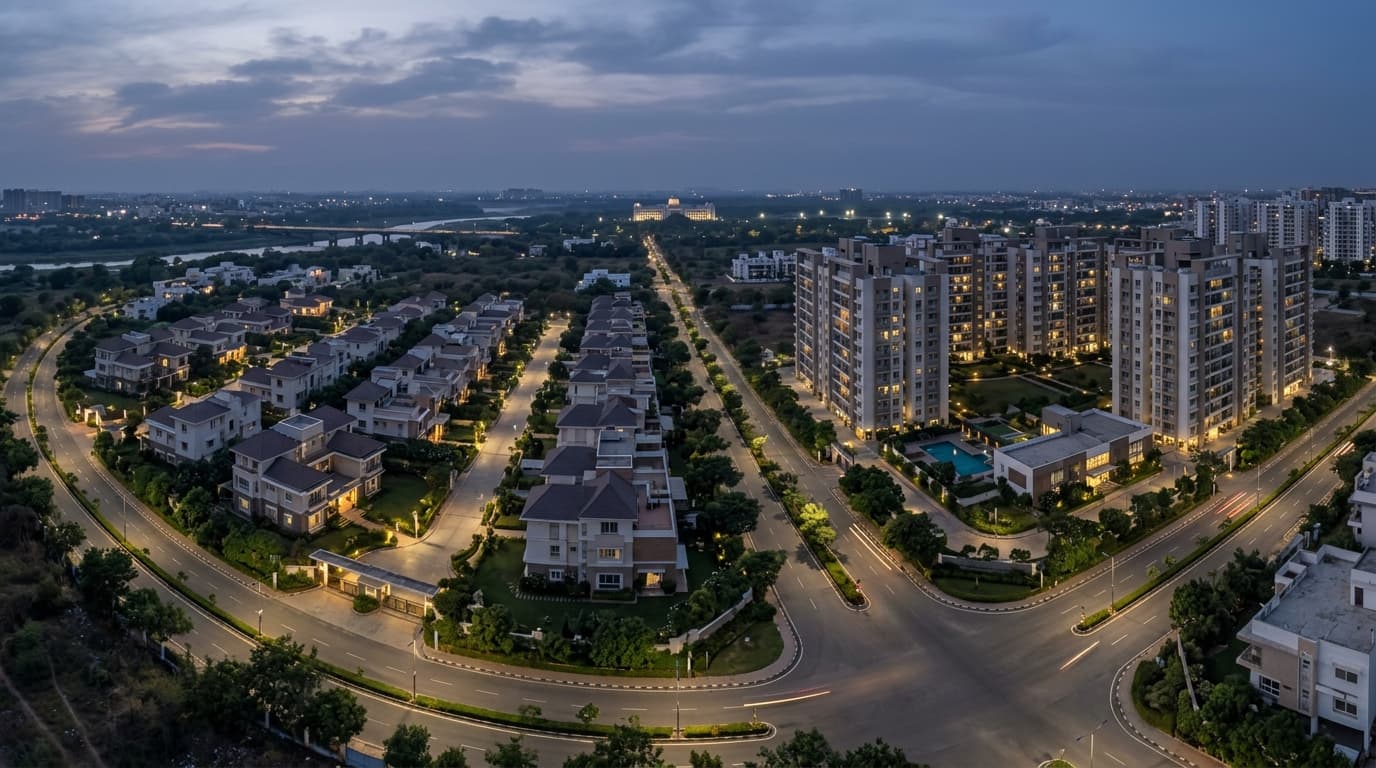
Buyers are now weighing two very different lifestyles – a private‑garden villa on the city fringe versus a high‑rise apartment in the urban core – while also crunching the numbers on long‑term returns.
Infrastructure That Is Changing the Game
The next five years will see a massive rollout of metro corridors, expressways, and smart‑city hubs across the peri‑urban belts of Mumbai, Bengaluru, Hyderabad, and Pune. A villa located just 1 km from a planned metro station can see its land value jump 15‑20% once the line becomes operational (industry trend). Meanwhile, apartments in already‑saturated city cores benefit from existing connectivity but face diminishing marginal gains as the network matures.
Key infrastructure catalysts (2024‑2027)
Mumbai Metro Line 3 (Colaba‑Cuffe Parade) – expected operational by 2026, adding
Bengaluru’s Peripheral Ring Road – slated for completion in 2025, unlocking peri‑urban villa corridors in Devanahalli and Hoskote.
Hyderabad’s Regional Ring Road – partial opening in 2024, driving villa land demand in Gachibowli‑Shamirpet stretch.
These projects not only improve accessibility but also trigger a cascade of ancillary developments – schools, hospitals, and retail hubs – that further boost both villa and apartment valuations.
Numbers That Matter 📊
Quick‑look table
Metric | Villa (under‑construction) | Apartment (under‑construction) |
|---|---|---|
Land appreciation | ↑ Value over time (Gsquarehousing) | ↓ Depreciates as building ages (Gsquarehousing) |
Launch‑price discount | 10‑15% off completed‑project price | 5‑8% typical discount |
Payment‑plan down‑payment | 10‑15% of total price | 15‑20% of total price |
Bank LTV | 70‑80% (plot as collateral) | Up to 90% (flat) (Mint) |
Rental yield – short term | 6‑8% p.a. (Airbnb data) | 3‑4% p.a. (city core) |
Rental yield – long term | 4‑5% p.a. | 3‑4% p.a. |
Possession timeline | 2025‑2027 for most launches | 2024‑2026 for high‑rise projects |
Takeaway: Villas give you a land‑rich asset that appreciates, while apartments provide quicker possession and higher loan‑to‑value ratios.
Why Smart Investors Are Buying Now
Price‑lock advantage – Most developers lock villa prices for up to five years. After the first two years of construction, prices in the same corridor typically rise 12‑15% (industry trend). Locking in today means you capture that upside before possession.
Phased payment flexibility – Villas under construction often require only 10‑15% down with the balance spread over construction milestones, easing cash‑flow pressure. Apartments may need a higher upfront amount for similar timelines.
Higher CAGR on land – Over a 10‑year horizon, villa land in major corridors has delivered 8‑10% compound annual growth, whereas apartments in the same corridors flatten or turn negative after 5‑7 years due to building ageing (Gsquarehousing).
Rental upside in peri‑urban zones – Premium villas near emerging metro corridors can fetch 6‑8% p.a. short‑term yields and 4‑5% long‑term yields, compared with 3‑4% for apartments in saturated city cores (Airbnb data).
Legacy and legacy‑value – A villa’s plot can be bequeathed, subdivided, or repurposed, offering a tangible asset for future generations, whereas an apartment’s value is tied to the building’s condition and management quality.
Builder Watch
DLF |
These developers have a track record of delivering on time and offering phased payment plans that start with 10‑15% down. Their projects are also RERA‑registered, adding a layer of buyer protection.
Frequently Asked Questions
Q: How does a pre‑launch villa price lock work?
A: The developer freezes the launch price for a set period (usually 5 years). Even if market rates climb, your purchase price stays the same, giving you built‑in appreciation before possession.
Q: Can I really get a 10‑15% discount on an under‑construction villa?
A: Yes. Most launches offer a discount of 10‑15% off the eventual completed‑project price to attract early buyers. This discount translates into an immediate paper‑gain once the project is handed over.
Q: Which offers better rental yield – a villa near a new metro line or an apartment in the city centre?
A: Villas near upcoming metro corridors can achieve 6‑8% short‑term yields and 4‑5% long‑term yields, outpacing the typical 3‑4% yields of apartments in saturated cores.
Q: Is financing available for a villa plot with 70% LTV?
A: Many banks now extend 70‑80% LTV on ready‑to‑build villa projects, using the plot as collateral. The terms may be slightly tighter than for apartments, but the higher asset appreciation often offsets the difference.
Q: Should I choose a villa for a legacy home?
A: If you value private open space, a garden, and a land‑rich asset you can pass down, a villa aligns with that legacy goal. Apartments offer convenience and lower upfront cost but lack the land‑appreciation upside.
Q: How do possession timelines differ between villas and apartments?
A: Under‑construction villas typically have possession dates 2025‑2027, reflecting larger land‑assembly and construction cycles. High‑rise apartments in mature corridors often target 2024‑2026 possession, giving quicker occupancy.
Expert Recommendations
Lock the price early – If you spot a villa launch with a 5‑year price‑lock, book within the first 30‑45 days to secure the 10‑15% discount and the projected 12‑15% appreciation.
Match your horizon – Plan to hold the villa for at least 7‑10 years to reap the full land‑appreciation benefit. If you need liquidity sooner, an apartment’s quicker resale may suit you.
Leverage financing wisely – While banks offer up to 90% LTV on apartments, many now provide 70‑80% LTV on ready‑to‑build villas using the plot as collateral. Factor the slightly lower loan‑to‑value into your cash‑flow model.
Consider rental strategy – For peri‑urban villas, explore short‑term vacation rentals on platforms like Airbnb to capture 6‑8% yields. In city cores, long‑term leases on apartments typically yield 3‑4%.
Check RERA compliance – Ensure the project is registered on the RERA portal, has a valid Occupancy Certificate (OC) timeline, and that the developer’s payment schedule aligns with construction milestones.
Watch the metro map – Prioritise villa projects within a 5‑km radius of a metro line slated to open before 2027. Historical data shows a 15‑20% land‑value uplift post‑operational.
Diversify – If budget permits, consider a dual‑portfolio: a villa for long‑term appreciation and a city‑center apartment for cash‑flow generation.
Micro‑Market Comparison
City | Villa Plots (2024‑2027) | Avg launch price (₹/sq ft) | Expected possession | Avg apartment price (₹/sq ft) | Rental yield (villa) | Rental yield (apartment) |
|---|---|---|---|---|---|---|
Mumbai (Navi Mumbai) | Kharghar‑Khopoli corridor | 8000 | 2026 | 12,000 (high‑rise) | 5‑6% (short‑term) | 3‑4% |
Bengaluru | Devanahalli‑Aerotropolis | 6,800 | 2027 | 9,500 | 5‑7% | 3‑4% |
Hyderabad | Gachibowli‑Financial District | 10,200 | 2025 | 8,200 | 6‑8% | 3‑4% |
Pune | Hinjewadi‑IT Park fringe | 7,000 | 2026 | 9,000 | 5‑6% | 3‑4% |
Data compiled from developer launch brochures and market‑trend reports (Anarock, Gsquarehousing).
Legal Checklist Before You Invest
RERA registration – Verify the project’s RERA ID and check for any pending complaints.
Title deed clarity – Ensure the land title is free from encumbrances; ask for a title search report.
Occupancy Certificate (OC) timeline – Confirm the developer’s OC schedule aligns with possession dates.
Payment‑schedule linkage – The payment plan should be tied to construction milestones (e.g., 10% on booking, 20% on foundation, etc.).
Developer’s past delivery record – Review past projects for on‑time handover and post‑sale service.
Bank loan eligibility – Check the LTV ratio, interest rate, and pre‑payment penalties for villa versus flat financing.
Tax implications – Understand stamp duty, registration fees, and capital‑gains tax scenarios for both asset types.
Inside Scoop
Insider tip from a senior RERA officer: “Buyers who lock villa prices before the first 30 days of launch often receive an extra 2‑3% concession on the down‑payment amount. It’s a small but effective way to improve cash‑flow without compromising on the asset’s upside.”
Who Should Buy Here?
High‑net‑worth families looking for a private garden, space for home‑offices, and a legacy asset – villas are the natural fit.
Young professionals who value proximity to workplaces, nightlife, and amenities – apartments in central business districts meet those needs.
NRIs seeking a hedge against currency volatility – villas offer land‑appreciation potential, while apartments provide easier financing and quicker rental income.
Investors with a 7‑10 year horizon – villas deliver higher CAGR and rental yields in emerging corridors.
Investors needing liquidity within 3‑5 years – apartments can be sold faster due to higher market depth.
Rent vs Buy Analysis
Parameter | Villa (under‑construction) | Apartment (under‑construction) |
|---|---|---|
Initial outlay | 10‑15% down‑payment + registration | 15‑20% down‑payment + registration |
Monthly EMIs (30‑yr loan @ 8.5%) | ₹45,000‑₹70,000 (based on ₹1.2‑₹1.8 cr) | ₹55,000‑₹85,000 (based on ₹1.0‑₹1.5 cr) |
Maintenance | Private garden upkeep (~₹5,000‑₹8,000) | Society charges (~₹8,000‑₹12,000) |
Rental income (annual) | ₹7‑₹9 lakh (short‑term) | ₹4‑₹5 lakh (long‑term) |
Net cash‑flow | +₹1‑₹2 lakh after EMIs | –₹1‑₹2 lakh after EMIs |
Appreciation (5 yr) | 12‑15% land value rise | 5‑7% flat price rise |
Price Trend Story
When the Godrej Villas Plots – Pune‑East launched in March 2024 at ₹7,500 per sq ft, the developer offered a 12% discount and a 5‑year price‑lock. By September 2024, the same corridor’s flat prices had risen 8%, while the villa land value was already 10% higher than the launch price, thanks to the upcoming Metro Line 3. Early buyers who booked within the first month now enjoy a paper gain of ₹1,200 per sq ft before possession – a classic example of the “price‑lock advantage” in action.
Red Flags to Watch Out For
Unregistered projects – No RERA ID or missing OC timeline.
Excessive land‑bank holdings – May indicate the developer is struggling to sell.
Delayed payment‑schedule – Payments not linked to construction milestones can lead to cash‑flow stress.
High LTV demand for villas – If a bank asks for >80% LTV on a plot, double‑check the land title and developer’s track record.
Unrealistic possession promises – Promises of “possession in 12 months” for a 30‑acre villa township are usually red‑flags.
Frequently Asked Questions (Extended)
Q: How does the rental yield of a villa compare when used as a short‑term vacation rental versus a long‑term lease?
A: Short‑term platforms like Airbnb can push yields to 6‑8% p.a., especially if the villa is near a tourist hub or metro station. Long‑term leases typically settle at 4‑5% p.a., offering more stable cash‑flow.
Q: Are there tax benefits specific to under‑construction villas?
A: Yes. Under Section 24(b), you can claim interest on the home loan for a villa up to ₹2 lakh per annum. Additionally, under Section 80C, principal repayment is deductible up to ₹1.5 lakh. These benefits apply equally to flats, but the higher loan amount for villas can amplify the deduction.
Q: Can I convert a villa plot into a multi‑family building later?
A: Zoning regulations vary by state. In most metro‑adjacent zones, a Plot Ratio (FAR) of 1.5‑2.0 allows for a duplex or low‑rise conversion, subject to municipal approvals.
Q: What’s the typical handover quality difference between villas and apartments?
A: Villas often have individualized finishes, private landscaping, and dedicated utility connections, leading to higher post‑handover satisfaction. Apartments rely on society‑wide maintenance, which can be uneven depending on the management committee.
Pre‑launch price lock: freezes price for up to 5 years.
Discount range: 10‑15% off completed‑project price.
Rental yields: 6‑8% short‑term for villas near metros; 3‑4% for city apartments.
Financing: 70‑80% LTV for villas, up to 90% for flats.
Possession: villas 2025‑2027, apartments 2024‑2026.
Legacy value: villas retain land value; apartments depreciate with building age.
The Big Picture
India’s under‑construction market is at a crossroads where price‑lock incentives, metro‑driven land appreciation, and flexible payment plans are reshaping buyer preferences. For investors with a medium‑to‑long‑term horizon, villas offer a land‑rich, appreciation‑heavy asset class, while apartments deliver quick occupancy and higher loan leverage. The choice ultimately hinges on lifestyle priorities, cash‑flow needs, and how aggressively you want to ride the upcoming infrastructure wave.
All data points are sourced from the latest market surveys, developer disclosures, and RERA‑registered project documents.
Tags & Categories
Checking out a specific developer?
Our team can walk you through a project's RERA filings, approvals and delivery record before you commit to anything.
Continue reading

Khopoli: Is This 'Mumbai 3.0' Hotspot with 38% Growth Your Next Big Investment?
json { "title": "Khopoli: Is This 'Mumbai 3.0' Hotspot with 38% Growth Your Next Big Investment?", "content": "Been hearing the buzz about…
Read Article

PPowai vs Kanjurmarg 2026: Which Mumbai Location Offers Better Real Estate Investment Returns?
Read Article

Mumbai Luxury Real Estate: Worli vs Lower Parel — Two Different Investment Stories
Read Article