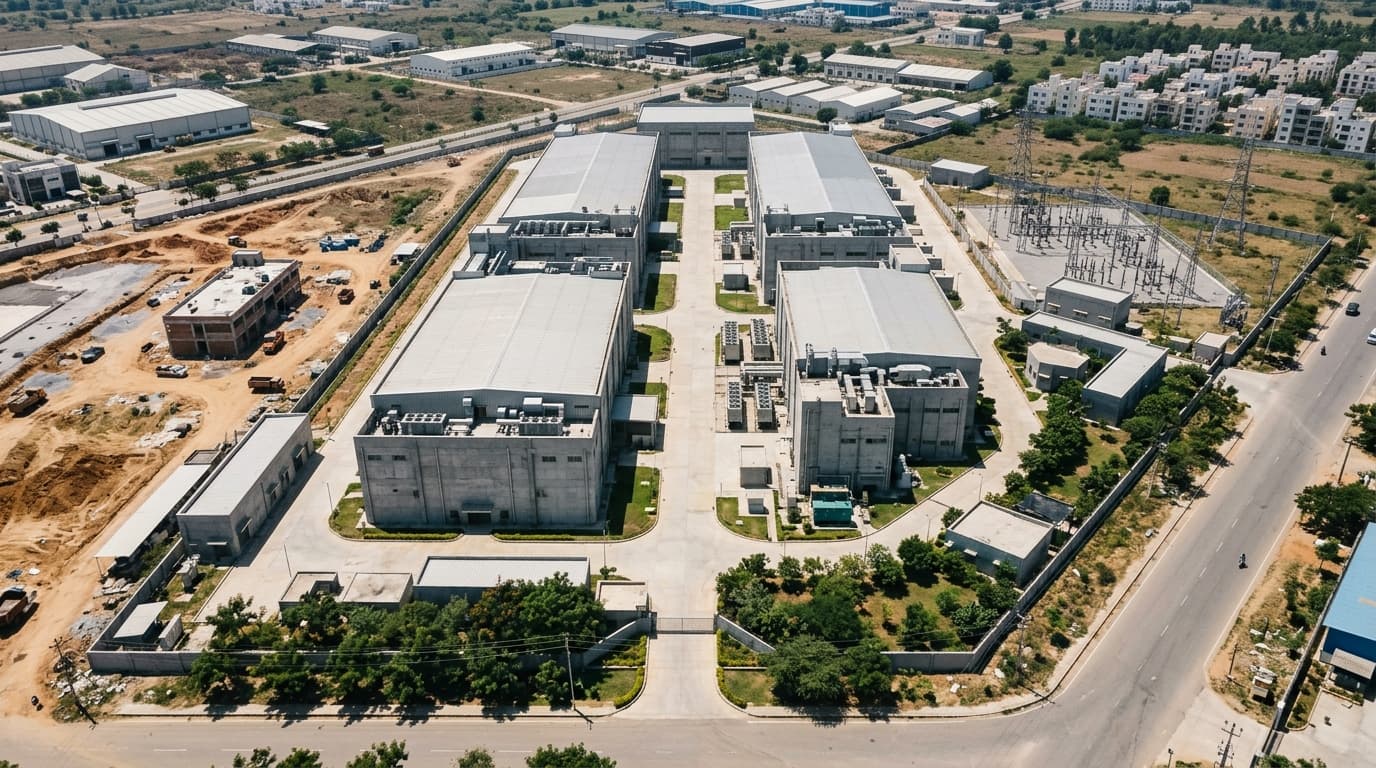
From Niche to Necessary: The Datacenter Value Explosion
Let’s chat about something you don’t see on your typical property portal: datacenters. Five years ago, if you mentioned a datacenter real estate investment in India, most people would have given you a blank stare. These were just giant, boring server rooms, right? Not exactly prime real estate.
Well, things have changed. Dramatically. The turning point was a perfect storm of India’s push for data localization (forcing companies to store Indian data within India), the explosion of cloud computing, and our collective addiction to streaming, gaming, and everything digital. Suddenly, these “boring” server rooms became the most critical infrastructure in the country.
This isn't a story of slow and steady appreciation like a residential apartment. It's a story of explosive growth in value. While we don't track datacenters by a simple price per square foot, the value is seen in the land they sit on. In key hubs like Mumbai, Chennai, and NCR, land parcels suitable for datacenters have seen their values skyrocket. Big players like Adani and NTT are in a race to acquire land, pushing prices up for everyone. The value isn't just in the land; it's in the potential of the asset itself, which has transformed from a niche industrial building into the backbone of the digital economy.
Before You Invest: What Are the Real Risks in Datacenters?
It's easy to get carried away by the hype, but a smart investor always asks, “What could go wrong?” A commercial real estate datacenter investment is a completely different beast from buying a flat or a shop. Here are the real risks you need to consider.
First, there's the risk of oversupply. The market is projected to double its capacity in the next few years (Knight Frank). While demand is strong now, you have to wonder if this massive construction boom could lead to a glut of datacenter space, which might push down those attractive rental yields.
Second, delivery risk is huge. Building a datacenter is incredibly complex and expensive. It requires uninterrupted power, high-level security, and sophisticated cooling systems. A single delay or technical snag can cause massive cost overruns. These aren't projects that get finished in a couple of years; they are long, capital-intensive undertakings.
Finally, think about technological obsolescence. Technology moves at lightning speed. A state-of-the-art facility today might be outdated in a decade. This is a significant long-term risk that doesn't exist in the same way for residential property. As an investor, you're betting that the facility can be upgraded and remain competitive for years to come.
India's Digital Backbone: A $40 Billion Buildout Is Happening Now
Right now, we are witnessing one of the biggest infrastructure buildouts in India's recent history. It's not just roads and bridges; it's the digital highways. The Indian datacenter market is on fire. To put it in perspective, a staggering USD 40 billion is expected to be invested in this sector by 2025 (Knight Frank). That’s not a typo.
What’s fueling this? It's a simple equation. More data needs more storage. The government's data localization policies, the rollout of 5G, and the rise of Artificial Intelligence and Machine Learning are creating a tsunami of data that needs a home. In response, total datacenter capacity in India is set to double from around 1 gigawatt (GW) to 2 GW by 2026 (Knight Frank).
This isn't just happening in one corner of the country. It's a nationwide phenomenon concentrated in key hubs. Mumbai and Chennai are leading the pack, largely due to their access to subsea cables that connect India to the global internet. They are followed closely by NCR, Pune, Bengaluru, and Hyderabad, which are major consumption and business centers.
Here’s a snapshot of the market right now:
| Metric | Figure | Source(s) |
|---|---|---|
| Projected Investment by 2025 | USD 40 Billion | Knight Frank |
| Expected Capacity Growth | Doubling from ~1 GW to 2 GW by 2026 | Knight Frank |
| Estimated Rental Yields | 12% - 19% | Knight Frank, JLL |
| Primary Market Hotspots | Mumbai, Chennai, NCR, Pune, Bengaluru, Hyderabad | Cushman & Wakefield, Knight Frank |
Unpacking the Paycheck: Can Datacenter Rentals Really Earn You 19%?
This is the part that gets every investor’s attention. When you rent out an apartment, you’re lucky to get a rental yield of 2-3% per year. With commercial office space, you might get 6-8%. Datacenters, however, are reportedly delivering yields between 12% and 19% (Knight Frank, JLL). It sounds almost too good to be true.
Let’s break down what that means. A rental yield is your annual rental income as a percentage of the property's value. A higher yield means the asset is generating more income relative to its cost. The high yields from datacenters come from long-term leases with high-quality tenants (think major tech and cloud companies) who cannot afford any disruption and are willing to pay a premium for reliability.
But here's the catch: you can't just go out and buy a datacenter. These are multi-million, sometimes billion-dollar, projects. The barrier to entry is immense. So, how can a regular person invest in datacenter India? Two exciting new avenues are emerging:
Datacenter REITs in India: A Real Estate Investment Trust (REIT) is like a mutual fund for property. It owns and manages a portfolio of income-generating real estate. As datacenter REITs become available in India, you'll be able to buy shares in a trust that owns multiple datacenters, giving you a slice of the rental income and appreciation.
Fractional Ownership Datacenter India: This model allows a group of investors to pool their money to buy a high-value asset. A platform will acquire a datacenter (or a part of it) and divide it into 'fractions' that you can buy. You become a part-owner and receive a proportional share of the rental income.
Both these options are making a once-inaccessible asset class available to retail investors. They are your ticket to potentially earning those double-digit yields.
The New Rules of Ownership: How You Can Actually Invest
Since you're not buying a residential property, the usual rules around RERA, Occupancy Certificates (OC), and Completion Certificates (CC) don't apply in the same way. A datacenter is a highly specialized commercial asset, and the legal framework is different. Instead of focusing on homebuyer laws, your due diligence needs to be on the investment structure itself.
If you're considering a fractional ownership datacenter in India, your primary focus should be on the platform offering the deal. You need to vet them thoroughly. Look into their track record, the legal structure of the deal (is it an SPV, or Special Purpose Vehicle?), the tenant's lease agreement, and the exit strategy. The legal documents will be complex, so it's wise to have a lawyer specializing in commercial transactions review them.
For datacenter REITs in India, the legal framework is governed by SEBI. This provides a strong layer of regulatory oversight, which is a big plus for investors. When you invest in a REIT, you are buying a unit on the stock exchange, similar to a share. The due diligence here is more about analyzing the REIT's portfolio, its management team, occupancy rates, and the quality of its tenants rather than checking individual property papers. Both are powerful ways to diversify your portfolio into an exciting new area of real estate.
Tags & Categories
Checking out a specific developer?
Our team can walk you through a project's RERA filings, approvals and delivery record before you commit to anything.
Continue reading

₹1,941 Cr. is reshaping Delhi’s roads
Read Article

Manjari Pune Insight: An Investor's Guide to Pune's Next Growth Corridor
I get this question over coffee all the time: "Where's the next big thing in Pune real estate?" For a while now, my answer has been…
Read Article
Is Powai Property Overvalued? A Data-Driven Look at the 'Hype'
You’ve heard the whispers, maybe even said it yourself over coffee: “Powai prices are insane,” or “Is Powai property overvalued?” It’s a…
Read Article